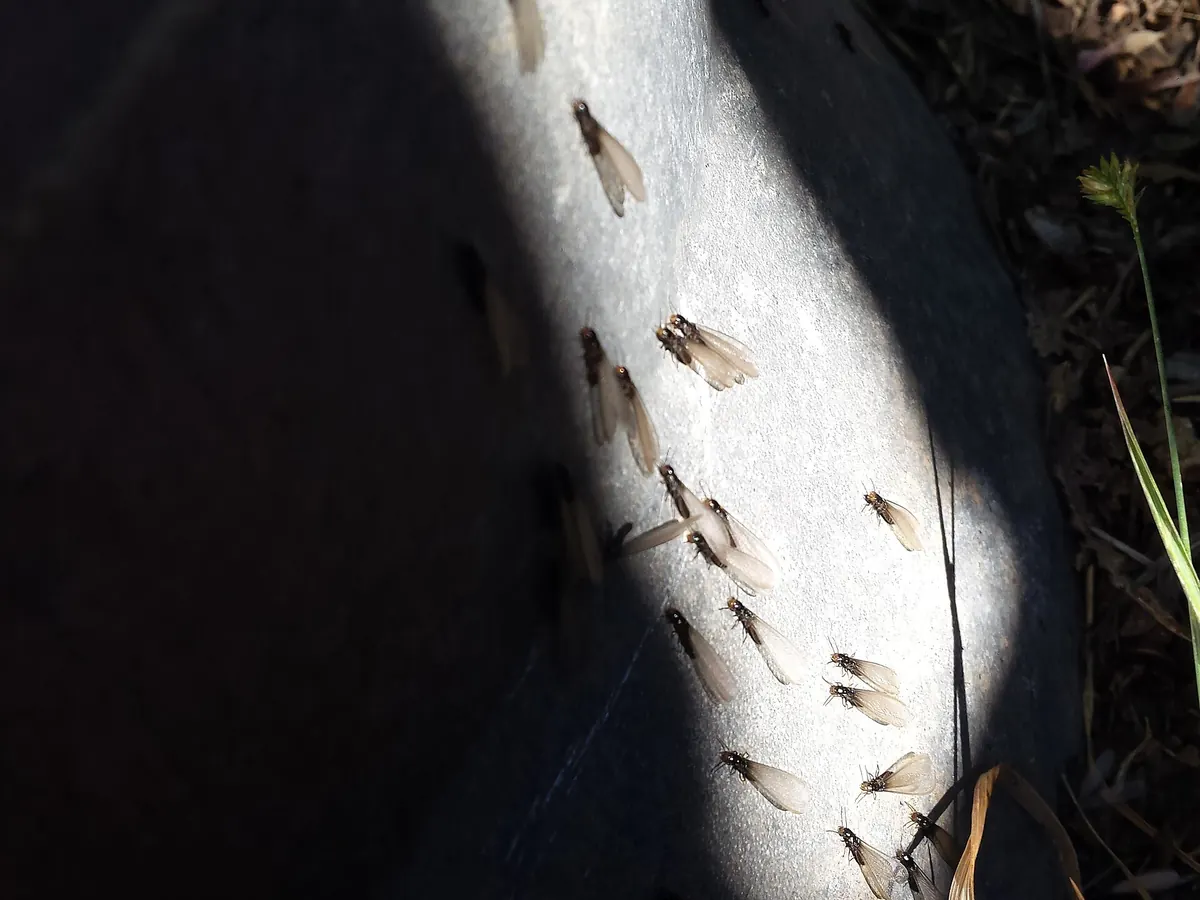
Every spring, Cedar Hill homeowners find a pile of winged bugs by a window and wonder if it is termites. Three quick checks will tell you.
Check the Antennae
Termite swarmers have straight, beaded antennae, like a tiny string of pearls. Flying ants have antennae with a sharp bend in the middle, like an elbow.
Check the Waist
A termite's body is thick and uniform from head to tail, with no real waist. An ant has a narrow, pinched waist between the thorax and abdomen. This is often the easiest difference to see without a magnifier.
Check the Wings
Termite swarmers have two pairs of wings that are the same length and longer than the body. They break off easily, which is why you find piles of loose wings on sills. Flying ants have front wings that are noticeably longer than the back wings.
Have a pest problem now? Talk to a local exterminator.
(469) 286-0478When and Where They Show Up
In Cedar Hill, subterranean termites usually swarm in spring, often in daylight on a warm day after rain. Indoors, they head for light: windows, sliding doors and light fixtures. Flying ants can swarm at different times of year depending on the species.
Either way, swarmers inside the house mean a colony is close. For termites, it often means the colony already has a route into the structure.
What to Do If You Find Swarmers
- Collect a few in a zip bag or take a close photo so they can be identified
- Vacuum up the rest; swarmers die within hours and do not damage wood
- Note where they came out, such as a window frame, baseboard or bath trap
- Do not spray the area, which can make it harder to find the source
Next Steps
If they are termites, schedule a termite inspection so the technician can find the entry point and recommend treatment. If they are ants, ant control focuses on finding and baiting the colony.