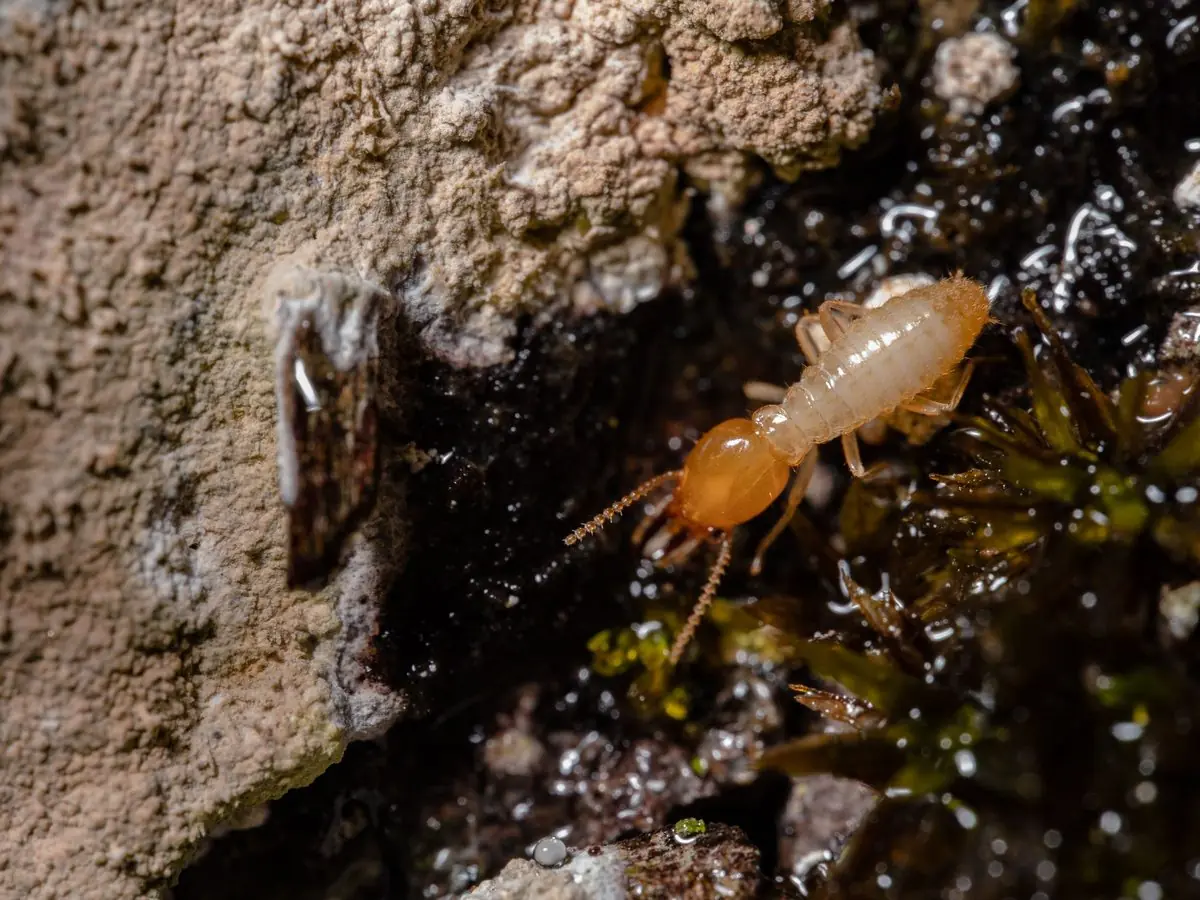
Termite Control
Mud tubes, swarmers or soft wood? Get an inspection and a soil treatment or bait system for your Cedar Hill home.
Learn more about termites »
Buying, selling or just wondering if that mud on the foundation means anything? A termite inspection tells you whether wood destroying insects are active, have been active, or have the conditions they need. For a real estate deal in Texas, it comes as an official WDI report.
Busy season in Cedar Hill: March to May.
The inspector walks the inside and outside of the house looking for live termites, old damage, mud tubes and the conditions that attract them. That means checking the foundation edge all the way around, the garage walls, bath traps under tubs and showers, plumbing penetrations, door frames, window sills, the attic where it is accessible, and any wood that touches soil.
They also note conducive conditions. Wood mulch piled against the slab, a leaking hose bib, soil higher than the foundation line, or firewood stacked on the side of the house can all invite termites even when none are active yet.
In Texas, the official Wood Destroying Insect report is regulated by the Texas Department of Agriculture's Structural Pest Control Service, not by the real estate commission. The person signing it needs a TDA license with the right category. A general home inspector alone cannot issue one.
VA loans typically require a WDI report. Some FHA and conventional lenders ask for one too, and plenty of buyers order one on their own. The report records active infestation, signs of past activity, visible damage, conducive conditions and any areas the inspector could not reach.
If the report turns up activity, you will get a treatment recommendation. Buyers and sellers then negotiate who pays. Ask the inspector to explain anything marked as previous treatment or inaccessible before you sign off.
Dealing with termite inspection right now?
(469) 286-0478Cedar Hill's housing runs from 1960s ranch homes near downtown to newer brick subdivisions off FM 1382 and Lake Ridge Parkway. Almost all of it sits on concrete slabs, and almost all of it sits on clay that moves. Slab movement is the common thread in local termite findings.
Inspectors here pay close attention to the garage. The garage slab is usually poured separately from the house slab, and the joint between them is a classic entry point. Mud tubes often run up that joint behind storage shelves where nobody looks.
Bath traps are the other hot spot. Many slab homes have a box-out under the tub drain where the concrete was left open for plumbing. It is bare soil under the house, and termites find it. An inspector should open the access panel if there is one.
Homes that back up to greenbelts, creeks or the wooded parts of the escarpment tend to show more conducive conditions: tree roots against the slab, dead limbs on the ground, heavy mulch beds. None of that means termites are active, but it ends up on the report. If you are buying near Joe Pool Lake or along the edges of Cedar Hill State Park, expect a longer list of notes than you would see on a house in the middle of a subdivision.
Most single-family homes in Cedar Hill take about an hour. Larger homes, pier-and-beam sections and detached buildings add time.
No. A Texas home inspector may note signs of termites, but the official WDI report has to come from someone licensed by the Texas Department of Agriculture for that work.
Real estate timelines are short, so call as early as possible in your option period. Inspections can often be scheduled within a few days.
You get a written recommendation for treatment. In a sale, that becomes part of the negotiation. See our termite control page for how treatment works.
Termite inspection is available across Cedar Hill and in Duncanville, DeSoto, Lancaster, Grand Prairie, Midlothian, Waxahachie, Oak Cliff, and Mansfield.
Mud tubes, swarmers or soft wood? Get an inspection and a soil treatment or bait system for your Cedar Hill home.
Learn more about termites »Spiders, crickets, silverfish and stray roaches. Quarterly treatment around the house keeps them outside.
Learn more about general pest »Scratching in the attic at night? Trapping, cleanup and sealing the gaps rats and mice use to get in.
Learn more about rats and mice »
Call now to talk to a local exterminator. Same-day service is often available in Cedar Hill.